
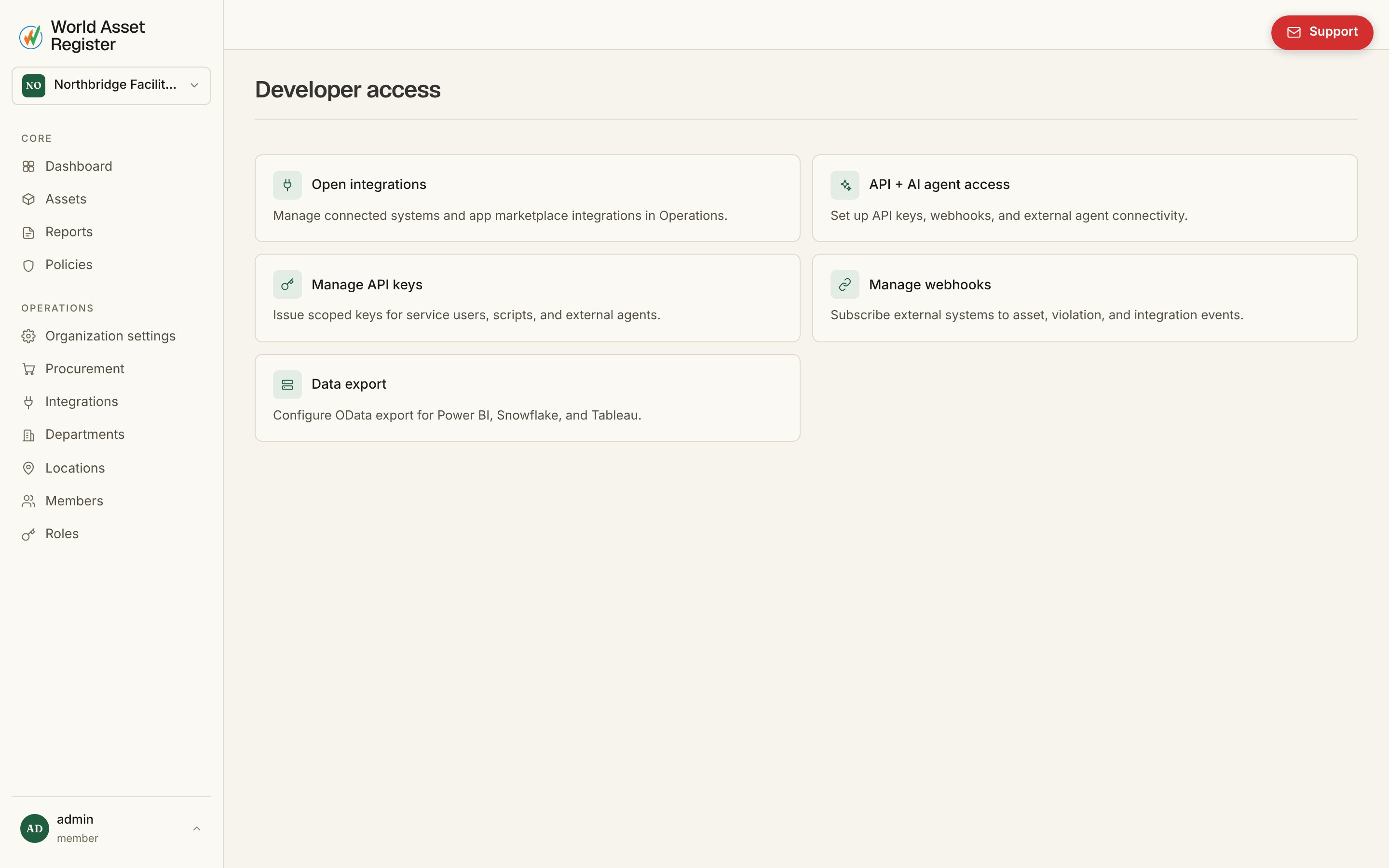
API keys
External tools and AI agents connect through the same permissions model as your users. The recommended pattern:- Create or pick a service identity in the workspace.
- Assign the minimum role and permissions needed, read-only where possible.
- Create an API key with matching scopes and an optional expiry date.
- Use that key in your agent or integration.
Webhooks
Subscribe an external system to events likeasset.created and
asset.updated, and it gets a signed HTTP request the moment something
happens instead of having to poll. Each webhook’s delivery history is
visible on its page, including failures, so a broken endpoint is easy to
diagnose. Verify the signature on your receiving end to confirm a
delivery genuinely came from World Asset Register.
Data export
Data export configures a live, read-only OData v4 feed at/api/odata/Assets. Power BI, Excel and Tableau connect to it natively,
authenticating with an API key or a workspace token. It supports
filtering and incremental queries, so a BI dashboard can pull only what’s
changed since its last refresh instead of the whole register every time.